
Every fall the same question comes across the counter: "Do I really need winter tires, or are my all-seasons fine?" The honest answer is that it depends on where you drive and what your tires look like right now. Here is how to decide, without a sales pitch.
Why Hazleton is different from the valley
Hazleton sits on the mountain, well above Wilkes-Barre and the Lehigh Valley. That is why the first snow of the year shows up here before it shows up down there, and why it stays on the side roads longer. If your commute runs down Route 309 or across Route 940 in January, you are driving on cold, often wet or icy pavement for months, not weeks.
That matters more than the snow itself. Winter tires are not just "snow tires." They are built from a softer rubber that stays flexible in the cold, so they grip cold pavement, wet or dry, in a way an all-season tire cannot once the temperature drops.
The 45-degree rule
The rule of thumb tire makers use is simple: once daytime highs stay at or below about 45°F, all-season rubber starts to stiffen and loses grip, and that is when winter tires start earning their keep. In Hazleton that usually means late October or early November, and it runs through March.
The flip side is just as true. Winter tires wear fast on warm pavement, so leaving them on through the summer costs you a set of tires. Two swaps a year, spring and fall, is the whole routine.
Are all-seasons enough?
Sometimes, yes. If you drive mostly in town on plowed roads, your all-seasons are newer with plenty of tread, and you can stay home on the bad days, you may be fine. Plenty of Hazleton drivers get through winter that way.
Winter tires make the biggest difference if any of these are true:
- You commute early, before the plows have been through
- You live on a hill or a road that gets plowed last
- You drive a rear-wheel-drive car or a pickup with an empty bed
- Your all-seasons are more than a few years old or getting low
One thing to clear up: all-wheel drive helps you go in snow. It does nothing to help you stop. Stopping is tires, full stop. An AWD car on worn all-seasons will slide right past a front-wheel-drive car on good winter tires.
Check your tread before you decide anything
Pennsylvania's inspection standard fails a tire at less than 2/32 of an inch of tread. That is the legal floor, and it is a bald tire by winter standards. Most tire makers say winter traction is largely gone by around 4/32, long before the tire fails inspection.
Tread standard per 67 Pa. Code § 175.80. The 4/32 figure is industry guidance, not a state rule.
The quarter test is quick: put a quarter into the tread with Washington's head down. If the tread does not reach the top of his head, you are at or under 4/32, and the tires you have are not winter tires no matter what is printed on the sidewall. If they are that low, the question is not "winter tires or all-seasons," it is "new tires before the snow." Bring it by and we will measure all four and tell you straight.
All-wheel drive helps you go. Only tires help you stop.
What Pennsylvania actually requires
Nothing. The state does not require winter tires, and there is no winter tire law here the way there is in some northern states and provinces. The one rule worth knowing is for studded tires: they are allowed only from November 1 through April 15. Run them outside that window and it is a violation, and they chew up dry pavement anyway. For most Hazleton drivers a good studless winter tire is the better choice.
What the switch costs
The honest answer is that it depends on your tire size and whether you have a second set of wheels. A winter set on its own wheels costs more the first year and less every year after, because the swap is then a quick wheel change instead of mounting and balancing tires twice a year. A single set of tires swapped on and off your existing wheels is cheaper up front and costs a little more each season.
We do not quote prices in an article because tire prices change and every size is different. Call with your tire size, or the year, make and model, and we will give you a real number for your car before you come in. No one should find out what a job costs after it is done.
While the wheels are off
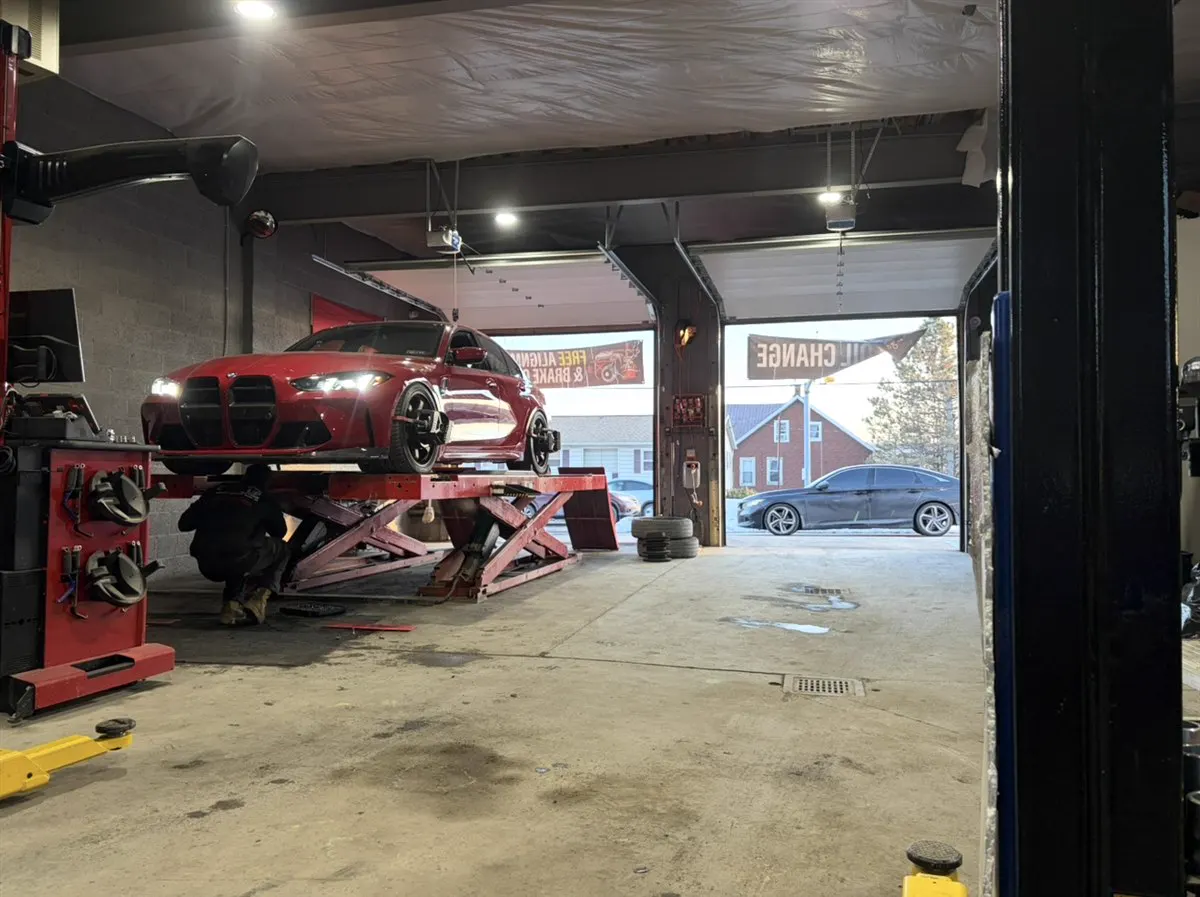
A tire swap is the cheapest look at your brakes you will ever get, because the wheels are already off the car. If the pads are thin or a rotor is scored, it is far better to find out in October than on an icy hill in January. We will tell you what we see, and what it would cost to fix, and you decide. If a warning light has been on, this is also a good time to have the code read in the same visit.
The short version
Check your tread with a quarter. If it is low, you need tires before winter regardless. If your commute is early, hilly or rural, winter tires are worth it up here. Plan the swap for late October, and do not wait for the first storm, because that is the week every shop in Luzerne County is booked solid.